

AI Engineer
- Job ID
- 74192
- Category
- Global Data Insight & Analytics
- Location
- Chennai, India
- Work Type
- On-site
Your primary mission will be to design, build, and take to production Generative AI tools and Large Language Model (LLM) applications that assist our analytical modelers in their day-to-day work — AI co-pilots for code generation, automated model-documentation and validation generators, and monitoring agents. You will own these solutions end to end: from architecture and model selection through cloud deployment, evaluation, observability, cost efficiency, and secure operation at scale on Google Cloud Platform. Beyond individual delivery, you will raise the bar for the team — defining engineering standards, reviewing designs, mentoring engineers, and partnering with platform, security, and model risk stakeholders so that GenAI capability lands in production safely and stays reliable.
GenAI Solution Architecture: Architect and build production-grade LLM-powered applications, multi-agent systems, and workflow automations that assist model validators and quantitative modelers (e.g., independent validation agents, code-generation agents, monitoring agents). Own the technical design end to end, including model selection, prompting and orchestration strategy, retrieval design, tool integration, and evaluation criteria.
Agentic & Retrieval Systems: Design agent architectures with clear tool boundaries, guardrails, and fallback behaviour. Build retrieval-augmented generation (RAG) pipelines over internal data, including chunking strategy, embedding selection, index design, hybrid search, and grounding/citation quality. Define how agents are evaluated for correctness, hallucination, and safety before release.
Cloud Platform & Deployment Architecture: Design and operate highly available, multi-service AI workloads on Google Cloud Platform. Take ownership of the cloud architecture for AI applications — compute and serving patterns (Cloud Run, GKE), networking (VPC, private service access, egress controls), identity (IAM service accounts, least privilege), secrets (Secret Manager), storage and data services (GCS, BigQuery), and managed AI services (Vertex AI, Vertex Vector Search). Make deliberate trade-offs on scalability, latency, resilience, and cost.
AI-Ops & LLMOps at Scale: Establish and mature AI-Ops/LLMOps pipelines covering the full lifecycle of Generative AI tools: automated deployment, model and prompt versioning, artifact and evaluation tracking, regression testing of prompts and agents, and continuous monitoring for quality, drift, latency, token cost, and hallucination mitigation. Build the reusable platform components that let other engineers ship GenAI safely without rebuilding foundations.
CI/CD & Infrastructure as Code: Own CI/CD and infrastructure automation for AI services using Infrastructure as Code (Terraform, Cloud Build, Kubernetes manifests) and GitOps practices. Deliver reproducible, auditable, environment-parity deployments with automated testing, progressive rollout, and clean rollback paths.
Containerization & Performance Engineering: Package and serve AI applications as containerized microservices (Docker/Kubernetes), tuning autoscaling, resource requests and limits, cold-start behaviour, concurrency, caching, and batch versus real-time serving patterns. Drive down inference cost and latency without compromising quality.
Observability, Reliability & SRE: Instrument AI systems with structured logging, distributed tracing, metrics, alerting, and dashboards. Define SLIs/SLOs for AI services, run incident response and root-cause analysis, and design for graceful degradation when upstream model providers or quotas fail.
Security, Governance & Model Risk: Ensure every AI solution meets Ford's data privacy, security, compliance, and model-risk standards. Implement guardrails for internal data usage, prompt-injection and data-leakage protection, PII handling, access control, and audit trails — and produce the documentation and evidence needed for governance and audit review.
Technical Leadership & Mentorship: Provide technical direction across the AI engineering team: set coding, architecture, and evaluation standards; conduct design and code reviews; mentor engineers and modelers on GenAI engineering practice; and translate ambiguous business problems into scoped, sequenced technical roadmaps. Act as a trusted reviewer for peers and a bridge between analytics, platform, and risk stakeholders.
User-Centric Collaboration: Partner closely with analytical modelers to understand their daily bottlenecks, data prep challenges, and coding workflows, and convert those pain points into measurable AI products. Define success metrics up front and validate impact after adoption.
Skills & Knowledge
LLM & GenAI Technologies: Strong hands-on experience with LLM orchestration and agent frameworks (e.g., Google ADK, MCP), prompt and context engineering, function/tool calling, and working with both commercial and open-source foundation models — including reasoning about model capability, context limits, latency, and cost.
Cloud Platform (GCP): Strong hands-on experience designing and operating on Google Cloud Platform: Cloud Run, Cloud Build, GKE, GCS, BigQuery, Vertex AI, Vertex Vector Search, IAM, VPC networking, Secret Manager, and Artifact Registry. Comfortable contributing to cloud architecture decisions — service selection, networking topology, quota management, and cost optimization.
AI-Ops / LLMOps: Working knowledge of tools and platforms for model deployment, prompt and model versioning, evaluation harnesses, tracing, and monitoring of LLM and GenAI outputs in production. Experience defining evaluation datasets, automated scoring, and quality gates for GenAI releases.
DevOps, IaC & SRE Practices: Good proficiency in CI/CD tooling, GitOps, containerization (Docker), orchestration (Kubernetes), Infrastructure as Code (Terraform), and cloud-native monitoring, logging, and alerting.
Vector Databases & Retrieval: Experience with vector search and embedding technologies (e.g., Vertex Vector Search, sentence transformers) and the retrieval patterns that sit on top of them — hybrid search, re-ranking, and grounded generation.
Software Engineering: Strong hands-on Python engineering (5+ years), building APIs (FastAPI, Flask) that serve AI models to end users, with good typing, testing, packaging, and code-review practice. Enough full-stack understanding to integrate front-end, back-end, and AI services reliably.
Security & Compliance: Familiarity with cloud security practices, identity and access management, secrets management, network policies, and compliance requirements in regulated environments.
Analytics Workflow Understanding: Familiarity with the workflows of data scientists and modelers (data wrangling, feature engineering, model validation) so you can build tools that fit how they work.
Qualifications & Experience
Education: Master's or Bachelor's degree in Computer Science, Software Engineering, Artificial Intelligence, Data Science, Cloud Computing, or a related technical discipline.
Overall Experience: 6–9 years of software engineering, AI/ML, or cloud engineering experience, with experience owning systems in production.
GenAI Production Experience: Around 3 or more years of hands-on experience building and deploying LLMs and Generative AI applications in production, including experience taking a solution from concept into production and iterating on it with users.
Cloud & Platform Engineering: Experience building and operating AI/ML workloads on a major cloud provider (GCP preferred), including CI/CD for AI, containerization (Docker/Kubernetes), infrastructure as code (Terraform, Cloud Build, GKE), and production observability.
Seniority & Scope: Experience leading technical work: contributing to architecture, helping set engineering standards, reviewing designs, mentoring engineers, and working effectively across teams. Comfortable working with independence and navigating some ambiguity.
Communication: Ability to explain technical trade-offs to non-technical stakeholders — modelers, risk and governance partners, and leadership — and to work with them to agree priorities.
Good to Have: Exposure to the Banking, Financial Services, or Credit Analytics industries; familiarity with SAS to help build code-translation or modernization tools for modelers; experience with machine learning engineering and model serving frameworks; and any relevant cloud certification (e.g., Google Cloud Professional Cloud Architect, Professional Machine Learning Engineer, or Professional DevOps Engineer).
-
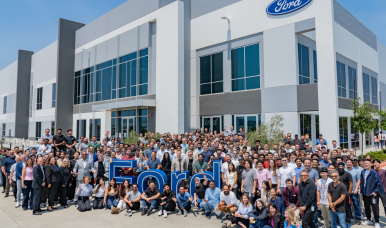
Built on one bold idea and the passion to define sustainable transportation for generations to come, Ford is a story about people with a vision that’s still being written.
What We Do -

Ford’s culture fuels the kind of momentum where ideas flow, progress is unstoppable, and our people keep redefining what it means to innovate.
Our People and Culture -

At Ford, your work matters, your life matters and we’re here to back the whole you—from growth to well-being—so you show up ready to realize your full potential.
Your Benefits
Jobs For You.
Explore roles tailored to your interests, based on your preferences and experience.
-
AI Engineer
- Chennai, India
-
Facility & Controls Engineer
- Rayong, Thailand
-
Senior Associate
- India